More than 50% of school trips take place in the summer term. But what if the best time for a language trip isn't the end of the school year, but the very beginning?
I spoke with Jo Wood, a languages teacher at Farmor's School, about how moving her Year 9 French trip to October boosted GCSE language uptake, eased financial pressure on parents, and set the tone for the entire academic year.
Q: What made you decide to take your Year 9 group to France in the autumn term rather than waiting for summer?
Jo: We wanted to take Year 9 before they chose their GCSE options. The goal is to promote the value of learning a language, give pupils a real-world reason to stick with French, and let them put into practice everything they’ve learned so far.
Taking them in October acts as a brilliant hook for GCSE uptake—it excites them at a crucial decision-making point, helping sway those undecided students who might be on the fence about taking French further.
From a practical perspective, it also spreads the cost out for families. Year 9 is a busy year with established trips like the Duke of Edinburgh’s Award and battlefield trips taking place in the summer. By running our trip in October, parents have finished paying for it by the end of Year 8, giving them room to save up for another trip later in the year.
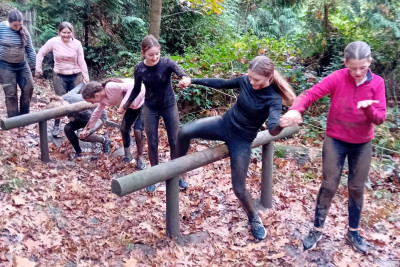
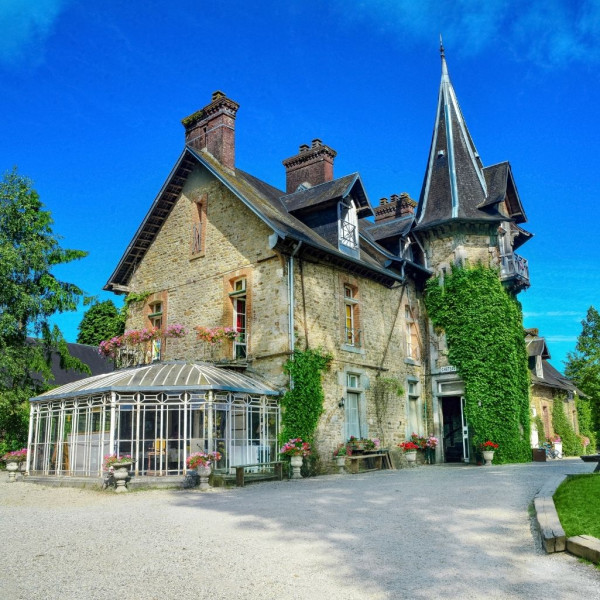
Students completing the Mud Run at the Château
Q: How do you handle taking students out of lessons during term time?
Jo: We work around our school's half-term dates. We struck an arrangement with SLT to use a couple of teaching days just before half-term, alongside an INSET day and a bit of holiday time.
With activities covering everything from cooking, PE and French lessons, you’ve got a good argument with SLT to take them out of school at that time. Since it's an educational trip, we still view it as being in school, just attending "French school" instead!
Q: What are the main benefits you’ve seen from travelling during off-peak months?
Jo: Greater flexibility is a massive factor. In the autumn, the Chateau team have much more leeway to accommodate last-minute changes or adapt activities.
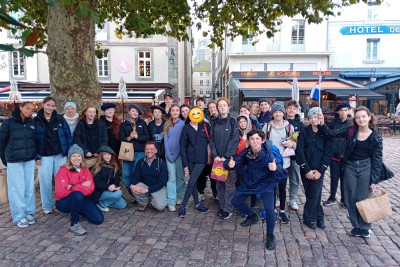
For example, one rainy day in Saint-Malo, rather than having ice creams on the beach as planned, we gave students 10 Euros to shop for French fancy dress costumes for that evening’s activity.
Travel is also significantly smoother—border controls and ferry crossings are much quieter, meaning no long queues or delays.
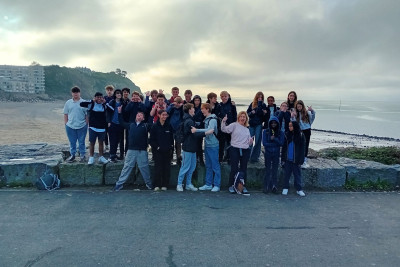
Students exploring Saint-Malo for the day
Q: Does taking the trip early in the school year have any educational benefits?
Jo: Yes, definitely. At the start of the year, the trip feels much more connected to what we are trying to achieve in the classroom. The message to pupils is: you are learning French so that you can go to France and speak French.
Students can immediately see why they are learning the language and then put it into practice in real-life situations. It’s more of an authentic learning experience.
By the summer term, there is so much going on in school. Exams are finishing, there are lots of activities and everyone is beginning to wind down. In October, students are much more focused on the year ahead.
Q: How does the early timing impact student confidence and learning?
Absolutely. We really see the results when it comes to speaking.
Students become much more used to thinking on the spot and responding in real-life situations. Something as simple as ordering food suddenly has a purpose. They come back remembering things they said, situations they found themselves in and funny moments they experienced.
It also builds teamwork and resilience right when the year begins. Whether it’s attempting to eat snails or tackling the Chateau’s mud course in the rain, those shared memories bring the group together and build a positive atmosphere around studying French.
We've seen students who can be quite reserved at school really come out of their shell.
Q: Does autumn weather pose any challenges for the itinerary?
Not at all! We’ve experienced all sorts of weather, and the students enjoy it regardless.
In some ways, I think very hot weather can be more challenging than a bit of rain. If students are sharing dormitories or taking part in outdoor activities, being in 40-degree heat in June can be much harder to manage.
The students are there to experience France, practise the language and take part in activities. It's not a beach holiday.
Jo's top tips for planning an autumn school trip
Check your school's calendar first Check your school calendar to avoid clashes with other trips. Justify the time out of school as a valuable educational experience that drives student engagement and language uptake.
Get in early Launch at least 12 months in advance of the trip. Remember, that parent information, payments and paperwork need to be completed before the summer holidays.
Think about the educational timing Could the trip help students build confidence at the start of a course, encourage them to continue with a language or help a new class get to know one another?
Don't let the weather put you off Remember that a good language trip should work whatever the weather brings. And travelling in the quieter months gives the centre team more flexibility to change your plans if need be.
Make the most of travelling outside the busiest period Quieter travel, fewer crowds and greater flexibility can all make life easier when you are organising and travelling with a school group.
Could autumn be the right time for your next language trip?
Jo's experience shows an early trip can give students a reason to engage with their language learning, build confidence and friendships, and create memories that support their learning throughout the school year.
For Farmor's School, what began as a practical decision about fitting a trip into the calendar has become an important part of its approach to language learning.
Sometimes, the best time for a school trip is simply the time that gives students the most opportunity to benefit from it.